



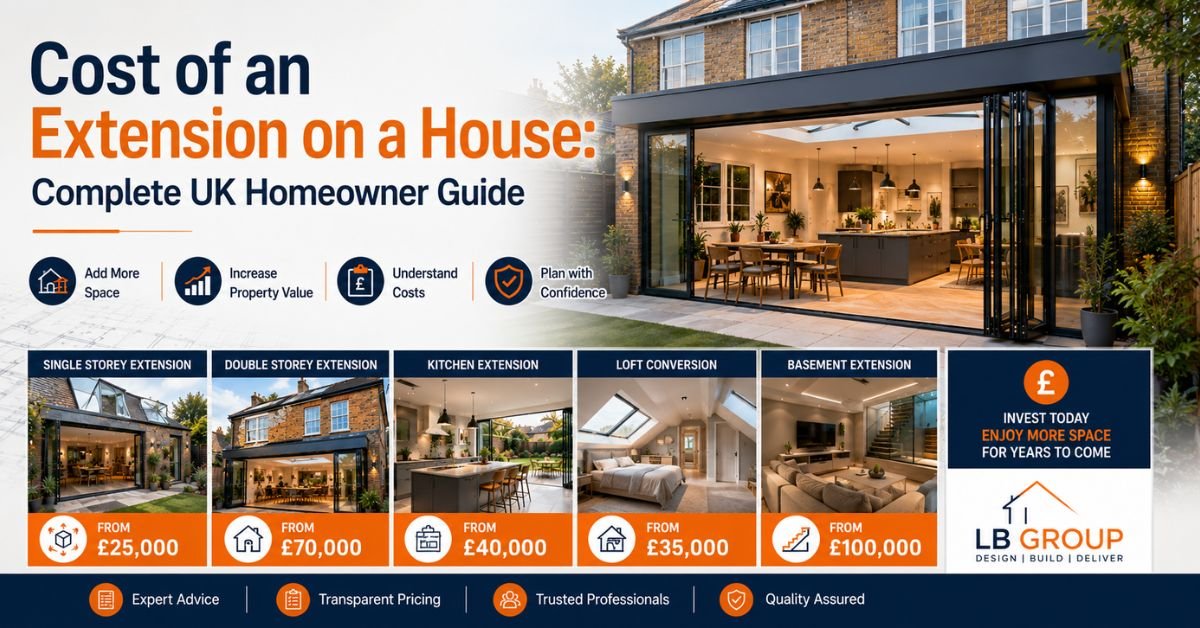
Cost of an Extension on a House: Complete UK Homeowner Guide
Building an extension is one of the most popular ways to add space to your property without the hassle of moving house. Whether you need more kitchen space, an extra bedroom, a home office, or a larger family room, a house extension can completely change how your property works for you and your family.
But if you’re considering building an extension, one of the first questions you’re likely to ask is:
“How much does a house extension cost?”
Cost is a major factor, and, of course, the price of a house extension will vary based on the type of extension you choose, the size of your property, location, the complexity of the design, and materials and labor costs.
In London and other major cities, prices tend to be far higher than the UK average due to greater labor and construction costs.
In this comprehensive guide, we’ll go over everything you need to know about the cost of house extensions in the UK, including average prices, hidden costs, planning fees, and tips for keeping your costs down.
What Is a House Extension?
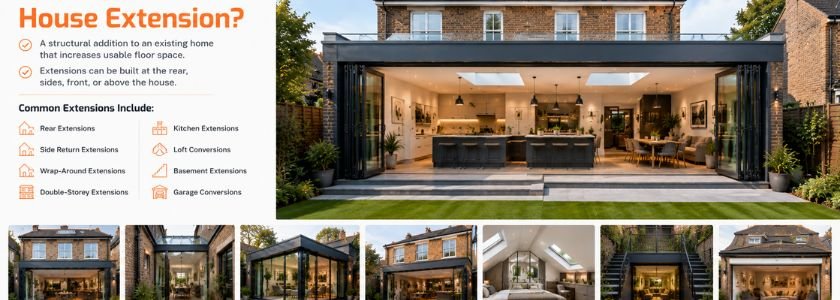
A house extension is a structural addition to an existing home that increases usable floor space.
Extensions can be built at the rear, sides, front, or above the house.
Common extensions include:
- Rear extensions
- Side return extensions
- Wrap-around extensions
- Double-storey extensions
- Kitchen extensions
- Loft conversions
- Basement extensions
- Garage conversions
They all come with different construction costs and benefits.
Average Cost of a House Extension in the UK
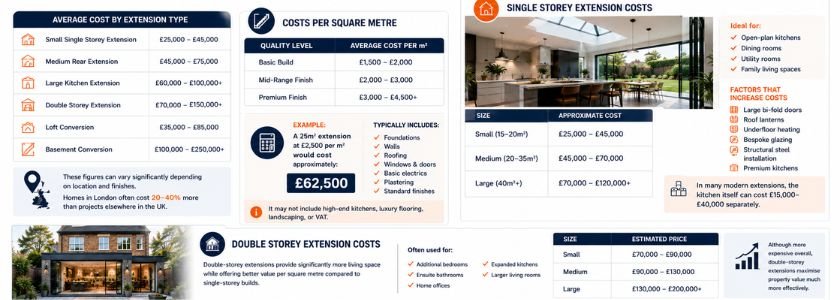
The average cost of a house extension in the UK generally ranges between:
| Extension Type | Average Cost Range |
| Small Single Storey Extension | £25,000 – £45,000 |
| Medium Rear Extension | £45,000 – £75,000 |
| Large Kitchen Extension | £60,000 – £100,000+ |
| Double Storey Extension | £70,000 – £150,000+ |
| Loft Conversion | £35,000 – £85,000 |
| Basement Conversion | £100,000 – £250,000+ |
These figures can vary significantly depending on location and finishes.
Homes in London often cost 20–40% more than projects elsewhere in the UK.
House Extension Costs Per Square Metre
Builders often estimate extension costs using square metre pricing.
Typical UK extension costs per m²:
| Quality Level | Average Cost Per m² |
| Basic Build | £1,500 – £2,000 |
| Mid-Range Finish | £2,000 – £3,000 |
| Premium Finish | £3,000 – £4,500+ |
For example:
A 25m² extension at £2,500 per m² would cost approximately:
25×2500=6250025 \times 2500 = 6250025×2500=62500
Estimated total: £62,500
This usually includes:
- Foundations
- Walls
- Roofing
- Windows and doors
- Basic electrics
- Plastering
- Standard finishes
It may not include high-end kitchens, luxury flooring, landscaping, or VAT.
Single Storey Extension Costs
Single-storey extensions are among the most common and affordable options for UK homeowners.
They are ideal for:
- Open-plan kitchens
- Dining rooms
- Utility rooms
- Family living spaces
| Size | Approximate Cost |
| Small (15–20m²) | £25,000 – £45,000 |
| Medium (20–35m²) | £45,000 – £70,000 |
| Large (40m²+) | £70,000 – £120,000+ |
Factors That Increase Costs
- Large bi-fold doors
- Roof lanterns
- Underfloor heating
- Bespoke glazing
- Structural steel installation
- Premium kitchens
In many modern extensions, the kitchen itself can cost £15,000–£40,000 separately.
Double Storey Extension Costs
Double-storey extensions provide significantly more living space while offering better value per square metre compared to single-storey builds.
They are often used for:
- Additional bedrooms
- Ensuite bathrooms
- Home offices
- Expanded kitchens
- Larger living rooms
Average Double Storey Extension Costs
| Size | Estimated Price |
| Small | £70,000 – £90,000 |
| Medium | £90,000 – £130,000 |
| Large | £130,000 – £200,000+ |
Although more expensive overall, double-storey extensions maximise property value much more effectively.
Kitchen Extension Costs
Kitchen extensions are one of the most popular home improvement projects in the UK.
A modern open-plan kitchen extension often includes:
- Dining space
- Kitchen island
- Skylights
- Sliding doors
- Utility room
Typical Kitchen Extension Costs
| Kitchen Extension Type | Cost Range |
| Basic Kitchen Extension | £40,000 – £60,000 |
| Mid-Range Open Plan | £60,000 – £90,000 |
| Luxury Kitchen Extension | £100,000 – £250,000+ |
Luxury kitchens can dramatically increase costs due to:
- Bespoke cabinetry
- Quartz worktops
- Smart appliances
- Designer lighting
- Premium flooring
Loft Conversion Costs
A loft conversion is one of the cheapest ways to add usable space to your home, without losing your garden.
Some of the most popular loft conversions include:
- Dormer loft conversion
- Velux loft conversion
- Hip-to-gable conversion
- Mansard conversion
Average Loft Conversion Prices
| Loft Type | Approximate Cost |
| Velux Conversion | £35,000 – £50,000 |
| Dormer Conversion | £45,000 – £75,000 |
| Hip-to-Gable | £55,000 – £85,000 |
| Mansard Conversion | £70,000 – £120,000+ |
Basement Extension Costs
Basement extensions are among the most expensive property improvements in the UK.
They are particularly common in premium areas of London where outdoor expansion space is limited.
Typical Basement Extension Costs
| Basement Type | Average Cost |
| Basic Conversion | £100,000 – £150,000 |
| Full Excavation | £150,000 – £300,000+ |
| Luxury Basement | £300,000 – £1 million+ |
Costs rise significantly due to:
- Excavation
- Waterproofing
- Structural engineering
- Drainage systems
- Party wall agreements
What Factors Affect House Extension Costs?
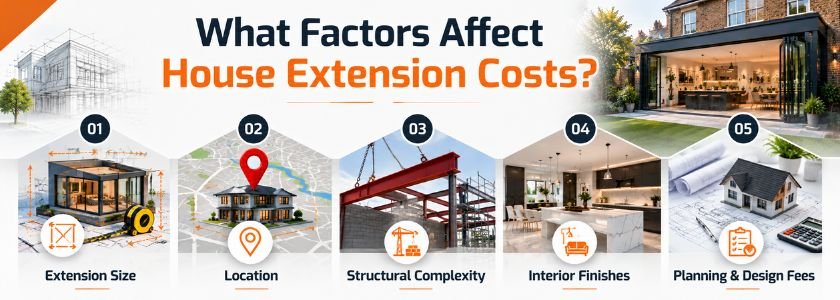
Extension costs can vary quite widely, even between two projects of a similar size.
Here are the most common reasons your final price tag will differ from other extensions.
1. Size of the Extension
A larger extension will clearly cost more because it involves:
- More building materials
- More labor hours
- Greater structural support
But larger extensions may also be cheaper to build per square meter.
2. Location
Building costs can vary widely from one region to another.
Projects in London and the South East are typically more expensive because:
- Labor rates are higher
- Demand is higher
- Parking/logistics is more difficult
- Transporting materials is more expensive
3. Structural Complexity
The building structure of your extension can increase costs if it needs:
- Steel beams
- Demolition of load-bearing walls
- Special foundations
- Large systems of glazing
- Basement excavation
4. Interior Finishes
Luxury interiors can make a big difference to your budget.
These can include:
- Marble flooring
- Smart home technology
- Designer kitchens
- Underfloor heating
- Bespoke joinery
5. Planning and Design Fees
Professional fees usually include:
| Professional Service | Typical Cost |
| Architect | 5–15% of project cost |
| Structural Engineer | £500 – £2,500 |
| Planning Application | £258+ |
| Building Control | £500 – £1,500 |
Hidden Costs of House Extensions
It’s easy for many people to forget about the extra costs beyond the primary work.
Popular ones include:
- Renting a place to live
- Demolition and clearing
- Painting and wallpapering
- Lawn mowing and planting
- Updating electricity and water
- Buying new furniture
- Revising home insurance
It’s good to have a “just in case” budget.
Builders often suggest:
Just in case, Budget=10% to 20% of the entire project budget
Do You Need Planning Permission?
Do you need Planning Permission for an Extension?
Extensions don’t always need Planning Permission.
In many cases, projects can proceed under Permitted Development Rights.
Ask for permission when:
- The extension is too big
- Your house is listed
- You live in a conservation area
- The design significantly alters the appearance of the building
Check your local authority’s regulations in your area before building.
Building Regulations for Extensions
Even when planning permission is not required, building regulations approval is usually mandatory.
These regulations ensure:
- Structural safety
- Fire protection
- Energy efficiency
- Ventilation standards
- Drainage compliance
Ignoring regulations can create major legal and resale problems later.
How Long Does a House Extension Take?
Project timelines vary depending on complexity.
| Extension Type | Estimated Timeline |
| Small Single Storey | 8–12 weeks |
| Medium Extension | 3–5 months |
| Double Storey | 4–6 months |
| Loft Conversion | 6–12 weeks |
| Basement Extension | 6–12 months |
Bad weather, planning delays, and material shortages can extend timelines.
How Much Value Does an Extension Add?
A well-designed extension can significantly increase property value.
Approximate value increases:
| Extension Type | Potential Value Added |
| Loft Conversion | Up to 20% |
| Kitchen Extension | 10–15% |
| Double Storey Extension | 15–25% |
| Basement Conversion | 10–20% |
In high-demand areas like London, extensions often deliver excellent long-term returns.
Ways to Reduce House Extension Costs
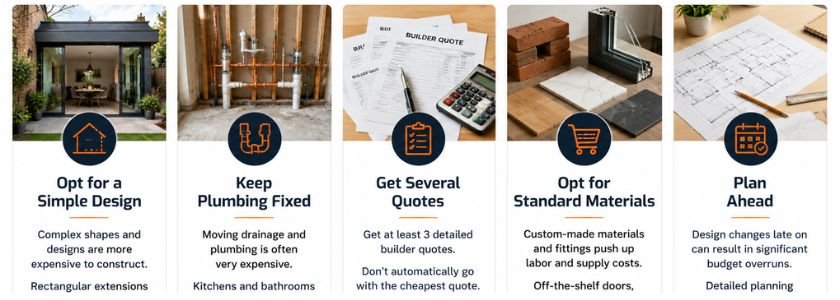
If you are on a tight budget, there are several ways to manage costs.
Opt for a Simple Design
Complex shapes and designs are more expensive to construct.
Rectangular extensions are usually cheaper to build.
Keep Plumbing Fixed
Moving drainage and plumbing is often very expensive.
Kitchens and bathrooms close to existing pipework are cheaper to build.
Get Several Quotes
Get at least 3 detailed builder quotes.
Don’t automatically go with the cheapest quote.
Opt for Standard Materials
Custom-made materials and fittings push up labor and supply costs.
Off-the-shelf doors, windows, and fittings tend to be cheaper.
Plan Ahead
Design changes late on can result in significant budget overruns.
Detailed planning minimizes the risk of expensive errors.
Is a House Extension Worth It?
For many homeowners, the answer is yes.
A house extension can:
- Create valuable extra space
- Improve daily living
- Increase property value
- Avoid moving costs
- Modernise older homes
However, success depends heavily on:
- Good planning
- Realistic budgeting
- Quality contractors
- Smart design decisions
Final Thoughts
Extensions can cost anywhere between £25,000 for a modest home extension, to several hundred thousand pounds for high-end luxury extensions and basement extensions.
Before starting an extension, it’s important to:
- Clarify your objectives
- Budget realistically
- Know your planning obligations.
- Employ experienced specialists
- Expect the unexpected
Done well, an extension is not a cost but an investment that should pay dividends for many years to come.